What are privately owned public spaces? 5-ish questions with B.L. Jordan and Sachin Dubey
¿Qué Son Los Espacios Públicos Privados? 5 Preguntas Con B.l. Jordan Y Sachin Dubey
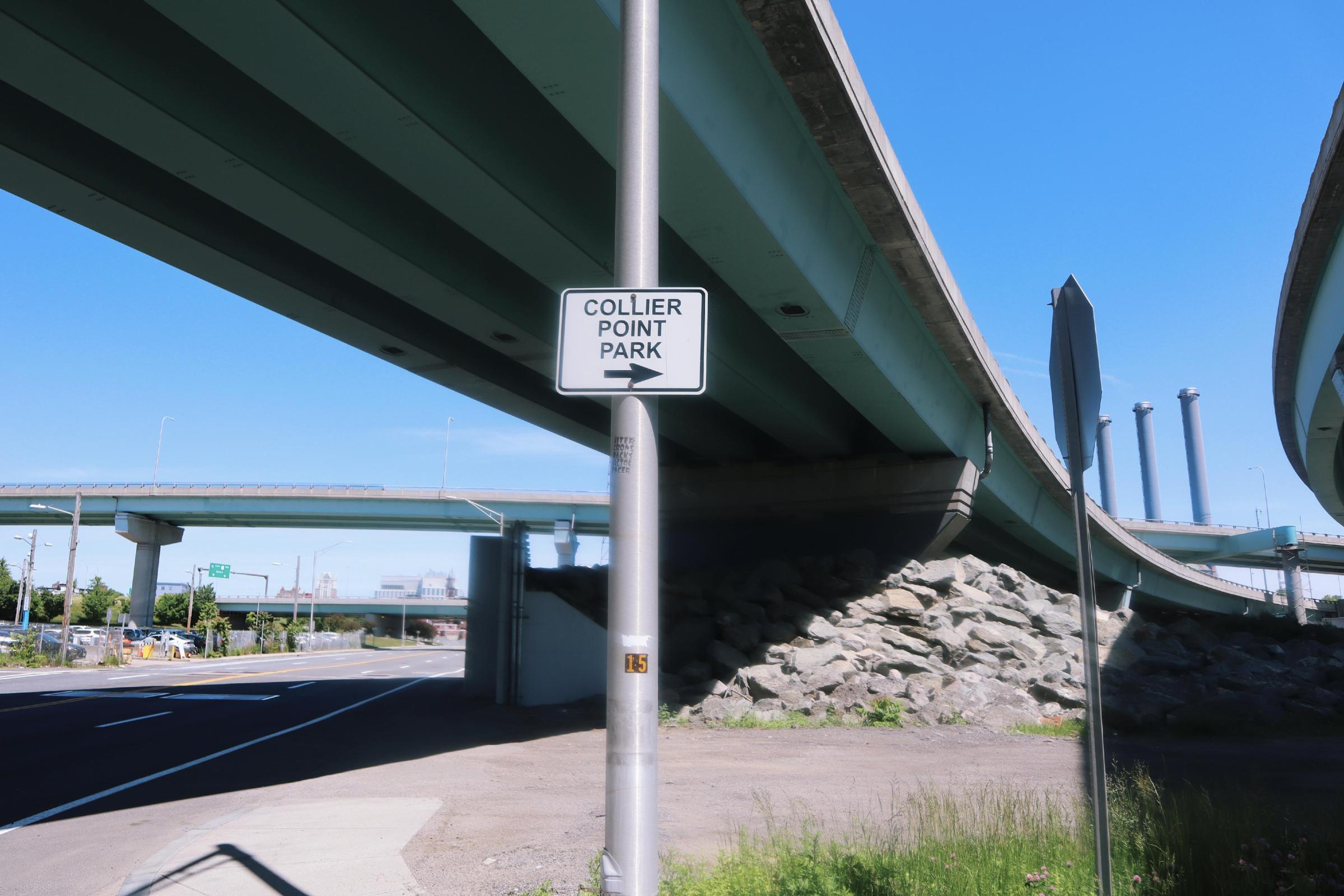
In 2024, Collier Point Park, a key public waterfront access on Providence’s South Side, abruptly closed for months, sparking public concern and its 2025 listing on the Providence Preservation Society’s Most Endangered Places list. This event highlighted the challenges surrounding privately owned public spaces (POPS), which are recreational areas open to the public but owned and managed by private entities. In Providence, POPS often arise through zoning incentives that allow developers to build taller structures in exchange for creating and maintaining public open spaces. Collier Point was designated a POPS in 1996 via an agreement between the city and the then landowner, Narragansett Electric.
Following the park’s closure, the Providence Preservation Society launched a research project on POPS, led by Policy and Trades Programs Manager B.L. Jordan, with assistance from summer fellow Sachin Dubey. Their work revealed the lack of a centralized database for POPS information in Providence, complicating efforts to identify and track these spaces. Dubey, new to both the city and preservation research, faced challenges navigating city archives and understanding historical zoning practices. The project aims to improve transparency and management of POPS to better protect public access in the future.
En 2024, el parque público Collier Point, ubicado en el South Side de Providence y uno de los pocos accesos públicos al frente marítimo de la ciudad, cerró abruptamente sin previo aviso, permaneciendo cerrado durante meses. Esta situación generó preocupación y llevó a que el parque fuera incluido en la lista de Lugares Más Amenazados de la Providence Preservation Society en 2025, impulsando una investigación sobre los espacios públicos de propiedad privada, conocidos como POPS. Estos espacios, accesibles al público pero gestionados por propietarios privados, suelen crearse mediante acuerdos de zonificación que permiten a desarrolladores obtener beneficios a cambio de mantener áreas abiertas. En el caso de Collier Point, fue designado como POPS en 1996 tras un acuerdo entre el gobierno local y el propietario de entonces, Narragansett Electric. La investigación, liderada por B.L. Jordan, gerente de programas de políticas y comercio, y apoyada por Sachin Dubey, becario enfocado en POPS, busca identificar y analizar estos espacios en Providence. El proyecto enfrenta retos debido a la falta de un repositorio centralizado de información y a la complejidad de los registros municipales, lo que dificulta la comprensión y el seguimiento de estos espacios en la ciudad.
Related News
Noticias relacionadas